
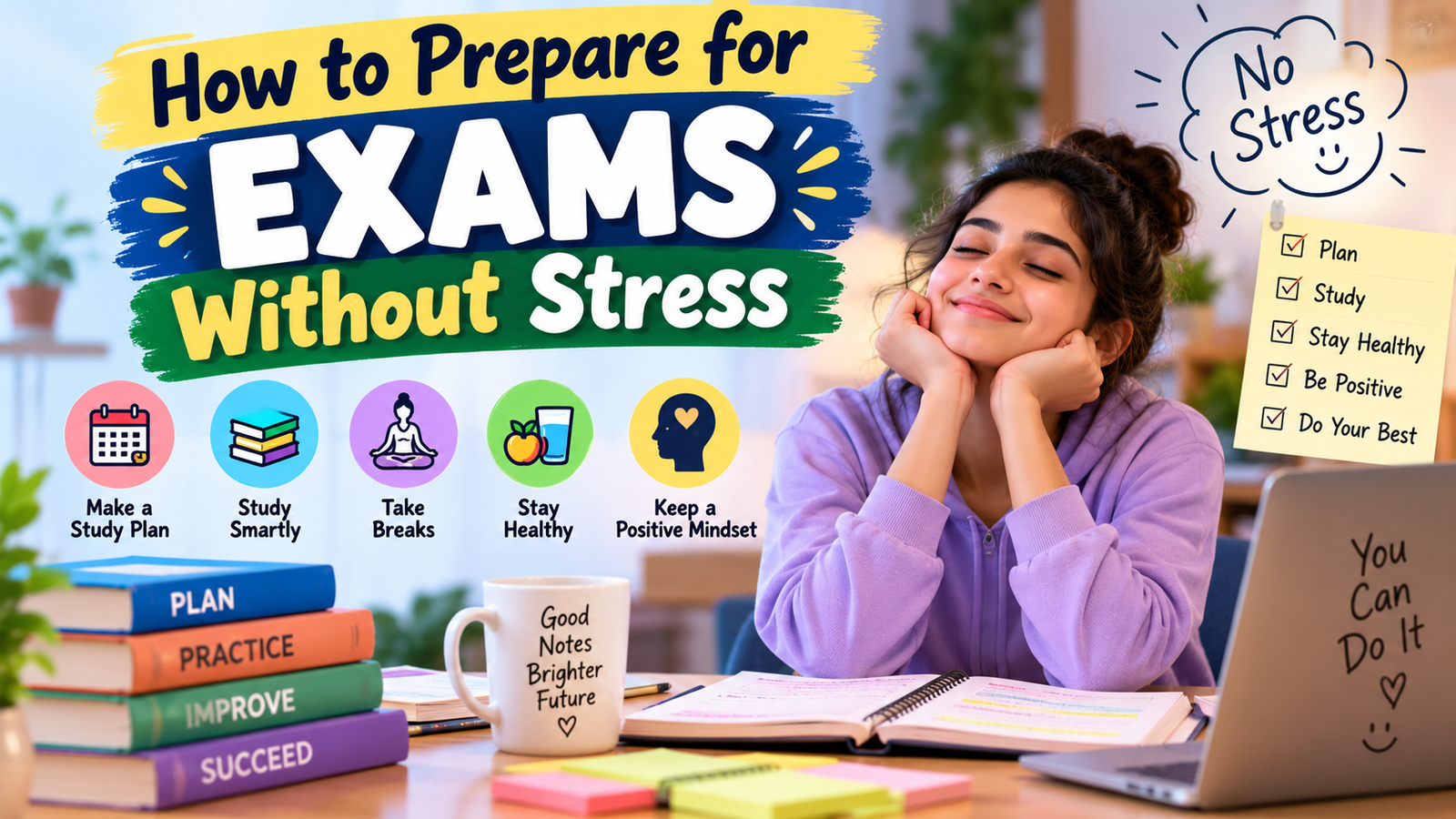
Exam preparation can be stressful for many students. As exams get closer, students may worry about unfinished chapters, difficult subjects, deadlines, and the fear of getting poor results. However, I believe exam preparation does not have to be overwhelming. With a realistic plan, consistent study habits, and enough rest, students can prepare for exams with much less stress.
In my experience, most exam stress comes from leaving preparation until the last moment or trying to study everything at once. When students divide their work into smaller tasks and give themselves enough time, exam preparation becomes more manageable.
In this article, I will share practical ways to prepare for exams without stress and create a study routine that supports both learning and peace of mind.
Start Exam Preparation Early
One of the best ways to reduce exam stress is to start preparing early.
When you wait until a few days before an exam, you may have to study many chapters in a short period. This can make you feel tired and overwhelmed.
Starting early gives you more time to understand difficult topics, review your notes, practice questions, and identify areas that need extra attention.
You do not need to study for many hours from the beginning. Even a short daily review can make a big difference when it is done consistently.
Know What You Need to Study
Before creating your study plan, find out exactly what topics will be included in the exam.
Review your syllabus, class notes, textbooks, assignments, and any information provided by your teacher.
Make a list of the chapters and topics you need to prepare.
Having a clear picture of the material can reduce uncertainty. Instead of worrying about everything at once, you can work through the list one topic at a time.
Create a Realistic Study Plan
A realistic study plan can make exam preparation much easier.
Divide the available days between your subjects and decide what you want to complete during each study session.
Avoid creating an extremely demanding schedule. If you plan to study for ten hours every day but can realistically manage only four or five focused hours, the schedule may quickly become frustrating.
A good study plan should include study time, breaks, meals, sleep, and personal time.

Prioritize Difficult Topics
Some topics will naturally be more difficult than others.
When creating your exam preparation plan, identify the subjects and chapters that require the most attention.
You can spend more time on difficult topics while giving less time to material you already understand well.
I find it helpful to work on challenging subjects when my mind is fresh. This allows me to give difficult concepts more attention instead of trying to understand them when I am already tired.
Break Your Syllabus Into Smaller Parts
Looking at an entire syllabus can make exam preparation feel overwhelming.
Instead of thinking about everything you need to learn, divide the syllabus into smaller sections.
For example, you can focus on one chapter today and another chapter tomorrow.
Once you complete each section, mark it as finished.
Seeing your progress can give you confidence and make the remaining work feel more manageable.
Focus on Understanding
Trying to memorize everything without understanding the subject can increase stress.
When you understand an idea, it becomes easier to remember and explain it.
Read the topic carefully and ask yourself what it means and why it is important.
If something is confusing, look for another explanation, review your class notes, or ask your teacher or a classmate for help.
Understanding should come before memorization whenever possible.
Use Active Study Methods
Simply reading your notes again and again may not be the most effective way to prepare for exams.
Try active study methods instead.
Ask yourself questions about the topic. Close your book and try to explain what you remember. Solve practice questions without immediately looking at the answers.
You can also create flashcards, write short summaries, or teach the topic to someone else.
Active learning keeps your mind involved and can make study sessions more productive.
Practice With Questions
Practice questions can help you understand what you know and what you still need to improve.
After studying a topic, answer related questions without checking your notes immediately.
If you make a mistake, review the topic and understand why the answer was incorrect.
Practice is especially useful for subjects that involve calculations, problem solving, writing, or applying concepts.
The goal is not simply to complete many questions. It is to learn from them.
Review Regularly
Regular revision can help reduce the pressure of exam preparation.
Instead of learning a topic once and forgetting about it, review it again after some time.
You can spend a few minutes reviewing important concepts, formulas, definitions, or notes from previous lessons.
Regular review makes the final days before an exam easier because you are refreshing information rather than learning everything from the beginning.
Avoid Last Minute Cramming
Cramming can create unnecessary stress.
Studying an entire syllabus during the final night may leave you feeling exhausted and worried.
Try to distribute your study work across several days or weeks.
If you have not completed everything before the exam, focus on the most important topics and avoid panicking.
A calm and focused approach is usually more useful than spending the entire night trying to memorize information.
Take Regular Breaks
Breaks are an important part of exam preparation.
Studying continuously for many hours can make you tired and reduce your concentration.
After a focused study session, take a short break. Walk around, drink water, stretch, or rest your eyes.
Try not to turn every break into a long social media session because it may become difficult to return to studying.
A good break should help you feel refreshed.
Keep Your Phone Away
Phones can become a major source of distraction during exam preparation.
Messages, notifications, videos, games, and social media can interrupt your concentration.
When studying, keep your phone away if you do not need it.
You can also turn off unnecessary notifications or use a focus feature.
If you need your phone for educational purposes, use it only for the required task.
Reducing digital distractions can make your study sessions shorter and more productive.
Take Care of Your Sleep
Sleep is especially important during exam preparation.
Some students believe that staying awake late every night gives them more study time. However, being extremely tired can make concentration and learning more difficult.
Try to maintain a regular sleep schedule.
Getting enough rest can help you approach your study sessions with a fresher mind and may make it easier to remember what you have learned.
Eat Properly and Stay Hydrated
Your body also needs care during exam preparation.
Do not regularly skip meals just to study longer.
Eat balanced meals and keep water nearby while studying.
If you feel hungry during a study session, a simple healthy snack can help you stay comfortable.
Basic healthy habits can support your energy throughout the day.
Organize Your Study Materials
Searching for books, notes, assignments, or practice papers can waste valuable study time.
Keep your study materials organized before beginning your exam preparation.
Use separate folders or notebooks for different subjects. Keep important notes in places where you can easily find them.
A simple organization system can reduce unnecessary stress and help you start studying faster.
Ask for Help When You Need It
You do not have to solve every difficult topic by yourself.
If you have been trying to understand a concept and still feel confused, ask for help.
You can talk to your teacher, classmates, friends, or family members who understand the subject.
Asking questions is a normal part of learning. It is much better to identify a problem early than to ignore it until the exam is close.
Avoid Comparing Yourself With Others
Every student has a different learning speed and study routine.
Comparing your preparation with classmates can create unnecessary pressure.
Someone else may finish a chapter faster, while you may need more time to understand it. That does not automatically mean you are doing poorly.
Focus on your own progress.
Ask yourself whether you understand more today than you did yesterday.
Personal improvement is more useful than constant comparison.
Manage Exam Worry
Some nervousness before an exam is normal. However, excessive worry can make it difficult to concentrate.
When you feel stressed, take a few moments to breathe slowly and remind yourself that you are preparing one step at a time.
Do not spend too much time imagining everything that could go wrong.
Instead, focus on the task in front of you.
Completing one chapter, solving one question, or reviewing one topic is more useful than worrying about the entire exam.
Prepare Everything Before Exam Day
Do not leave basic preparation until the last minute.
Before exam day, check the exam time, location, required materials, and any instructions you need to follow.
Prepare your stationery and other necessary items in advance.
If you need to travel to the exam location, plan your journey ahead of time.
Being prepared can reduce unnecessary stress on the morning of the exam.
Stay Positive About Your Progress
Your attitude can affect how you experience exam preparation.
Instead of thinking, “I will never finish this,” try to focus on what you can complete today.
Celebrate small achievements. Completing a difficult chapter or understanding a confusing concept is progress.
You do not have to feel completely confident every day.
Confidence often develops gradually as you prepare and practice.
Do Not Forget About Free Time
Exam preparation is important, but students also need time to relax.
Take some time each day for hobbies, family, friends, exercise, or other activities you enjoy.
You do not need to feel guilty about taking a break.
A balanced routine can help you return to your studies with better energy and concentration.
Final Thoughts
Learning how to prepare for exams without stress is mainly about planning ahead and maintaining a balanced routine. Starting early, understanding your syllabus, creating realistic goals, and studying consistently can make exam preparation much easier.
Focus on understanding instead of simply memorizing. Use active learning methods, practice questions, review regularly, and ask for help when necessary. At the same time, protect your sleep, eat properly, take breaks, and reduce distractions.
In my opinion, the most important thing is not to wait until the last moment. When you prepare step by step, exams become less intimidating and more manageable.
Remember that you do not need to be perfect. Focus on making steady progress, trust the preparation you have completed, and approach your exams with a calm and positive mindset.


